
The new RSHE guidance has been updated with a focus on teaching the knowledge and skills for healthy relationships in a digitally orientated world and the prevention of sexual violence.
But what are the most relevant changes for our learners with SEND?
This is one of two blogs we will be sharing. The first will explore the underlying themes and principles and in the second we will look at the new topics that have been added and discuss them in relation to teaching learners with SEND.
Guiding Principles
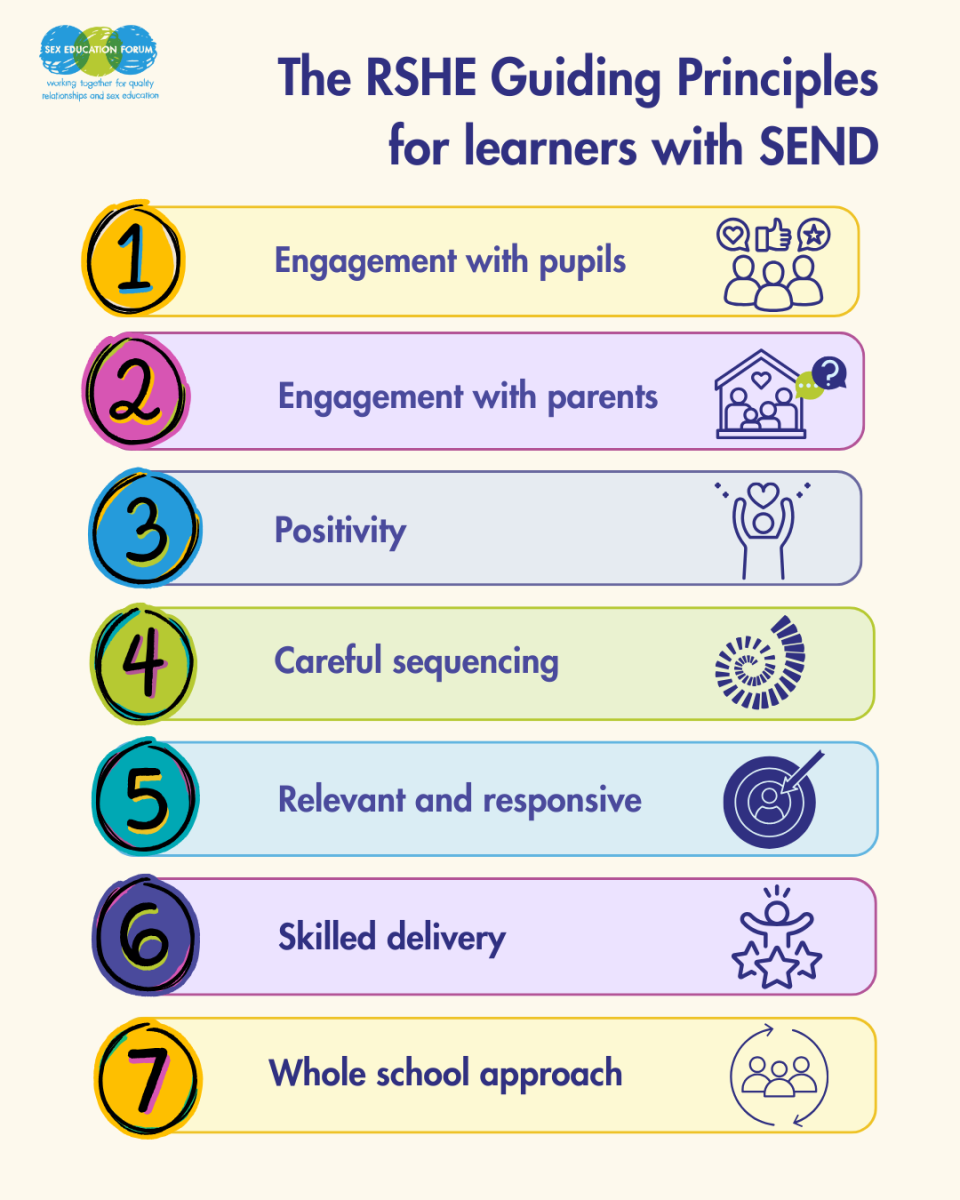
One of the key changes in the new RSHE guidance is the introduction of seven evidence-based Guiding Principles, as follows:
-
Engagement with pupils: This acknowledges the importance of meaningful engagement with learners to ensure the curriculum is relevant and engaging. In relation to SEND this might involve recording engagement with lessons that learners may have communicated through their physical reactions and facial expressions; all the way to pupil surveys, but it’s something we can involve all learners in.
-
Engagement with parents: As we know, consistency with messages is key, so getting parents and carers on board with our RSE teaching and involved from as early as possible is important. Normalising, the use of scientific terms for the genitals and its importance for safeguarding is crucial for parents to understand. Sharing the language and key concepts we are teaching as we go, means parents can be reinforcing and teaching the concepts in the home context too.
-
Positivity: Part of teaching positive attitudes is about our learners seeing themselves reflected in RSE, by talking about all aspects of their identity including their SEND through a strength-based lens. Only through building self-esteem and self-awareness can young people advocate for themselves. It’s also about normalising difficulty in relationships, such as dealing with rejection and giving skills and tools for navigating challenging situations and times.
-
Careful sequencing: All learners need to be able to access the whole breadth of the RSE curriculum in a way that is age,stage and developmentally appropriate to them. Even the secondary topics that are most nuanced and adult-themed can be simplified to be accessible to our learners with the most complex needs. It’s about finding and starting with the most fundamental underlying concepts and skills and how they apply in different contexts, building towards those skills needed for adulthood, just as we do with all other subjects. The guidance is also clear that an effective preventative approach means beginning learning early.
-
Relevant and responsive: This gives specialist settings the go ahead to really tailor their provision to the needs of their young people, based on educator assessment and relationship building with their students and the wider school community.
-
Skilled delivery: All teaching and support staff need to feel comfortable and confident in having RSE conversations and understand the role it plays in our students leading healthy, safe and fulfilling lives. Understanding staff feelings about the subject can help break down barriers, along with opportunities to work with colleagues to think about how the curriculum can be made relevant and accessible to their learners. Some settings have found Autistic students were less likely to consistently attend PSHE/RSE lessons so staff being aware of potential barriers for students engaging in sessions is important and how they can create safer environments for participatory RSE (NIHR, 2024)
-
Whole school approach: It’s crucial that all staff understand their role in teaching RSE through their everyday interactions with each other and the pupils. We are always modelling interactions and relationships, and can take numerous opportunities every day to demonstrate healthy, respectful relationships, consent to touch, privacy and how to communicate boundaries and feelings in a way which is clear and balances the needs of others. Particularly for our students with the most complex needs, applying and generalising skills in context is where a lot of our teaching and learning will take place.
Help and support from the Sex Education Forum:
Share